Gavryliv & Sons Fireplace Insert Options

Choose your insert configuration with confidence: compare materials, finishes and installation options. Explore the main Gavryliv & Sons options, their variants and their role in your fireplace.

See the selected insert’s product page for available variants and current prices. This guide explains the options but does not replace the model-specific drawing and instructions.

OPTION 01

Combustion chamber lining

The lining is the inner facing of the insert. It defines the appearance of the combustion chamber and separates the metal walls from direct flame exposure wherever the design provides for it.

How it works. Fireclay absorbs heat during combustion and releases it gradually. Lining options differ in material, thickness, colour and surface texture.

What it means for youChoose a lining not only for its appearance but also for its material properties, including resistance to stress and colour stability during use, from the configurations available for your insert.

Compare lining materials

Three materials. Different priorities.
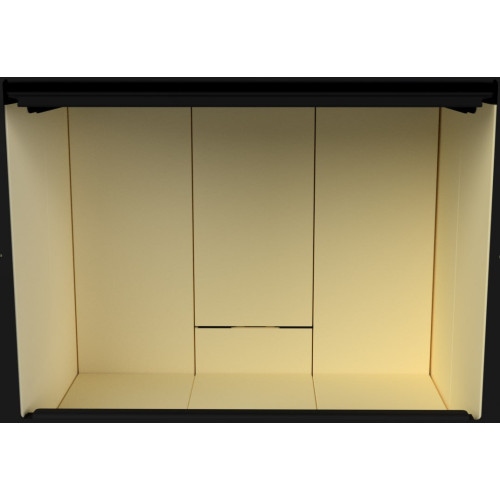
Classic yellow fireclay, 30 mm
THE CLASSIC OPTION

Yellow fireclay

A light-coloured chamber with the properties of classic fireclay.

Main advantage
Better physical and technical properties than black fireclay.
What to consider
The light-coloured material creates a different visual effect from a dark chamber.
Material characteristics
A traditional, high-quality solution for lining the combustion chamber.
Selection priority
A classic material and its physical and technical properties.
Black fireclay
A DARK INTERIOR

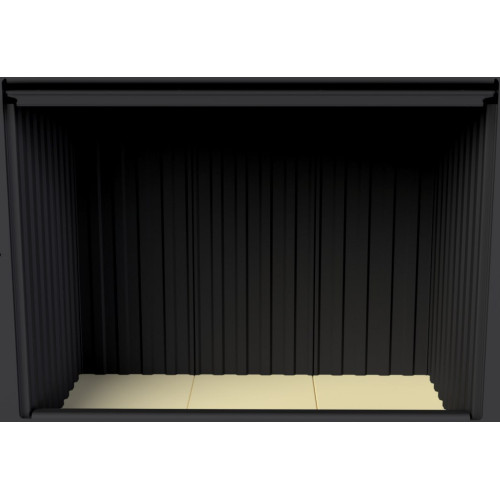
Black fireclay

A traditional choice for a dark combustion chamber.

Main advantage
A dark chamber with a fireclay lining.
What to consider
The black pigment gives it poorer physical and technical properties than yellow fireclay. Also consider its greater brittleness under thermal stress.
Colour change
Colour changes more noticeably than with designer cast iron.
Selection priority
The fireclay slab manufacturer recommends it primarily for large-format fireplace inserts, where high combustion-chamber temperatures are harder to achieve.
Designer cast iron
OUR FAVOURITE FOR A BLACK LINING

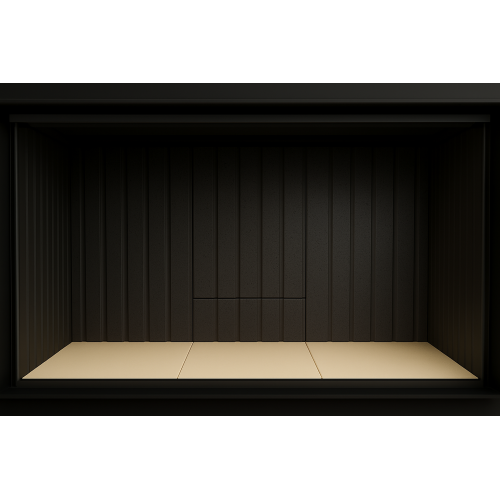
Designer cast iron

A distinctive texture and resistance to stress.

Main advantage
More resistant to mechanical damage and thermal stress than black fireclay.
What to consider
Availability must be checked for the specific firebox model.
Colour change
Less noticeable colour change than with black fireclay.
Selection priority
Our favourite for a quality black lining: distinctive design and greater resistance to mechanical damage and thermal stress than black fireclay.
Available materials depend on the firebox model.

Photos and detailed descriptions of all versions

Available versions

30 mm smooth fireclay
A light, even surface for a restrained chamber design. The elements are 30 mm thick.
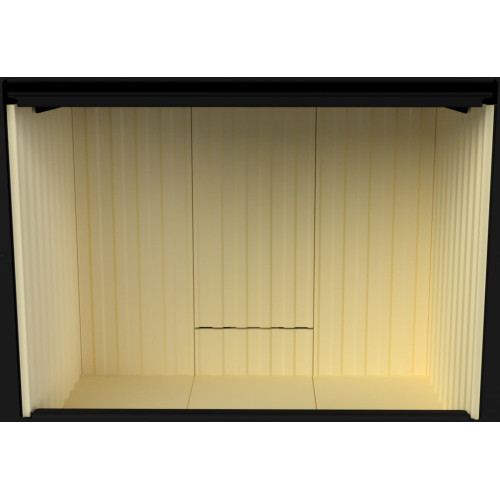
40 mm ribbed fireclay
Light-coloured lining with a pronounced texture. The elements are 40 mm thick.
Black fireclay
A traditional choice for a dark combustion chamber. The high content of added black pigment reduces its physical and technical performance compared with classic yellow fireclay. Note from the fireclay slab manufacturer. Because of its greater brittleness under thermal stress, black fireclay is recommended primarily for large-format fireplace inserts, where high combustion-chamber temperatures are harder to achieve. Its colour may change noticeably during use.
Designer cast iron
Our clear favourite for a quality black combustion-chamber lining, combining distinctive design with durability. Compared with black fireclay, designer cast iron shows less noticeable colour change and offers greater resistance to mechanical damage and thermal stress.
Bottom only
Lining of the chamber floor only, for models designed to offer this configuration.

An option listed in this guide is not necessarily compatible with every insert. Do not remove lining elements yourself to change the configuration.

OPTION 02

Mounting frames

The outline that connects the insert with the fireplace surround.

The mounting frame finishes the visible junction around the door and helps match the fireplace appearance to your design.

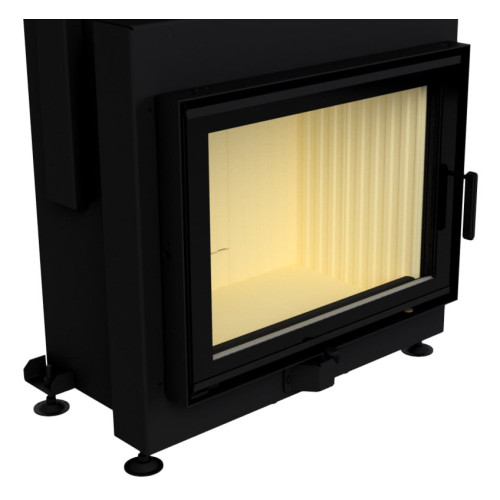
No frame — front-facing example
NO SEPARATE FRAME

No frame

For designs that do not include a separate decorative frame.

What to consider

The junction with the surround must be detailed during installation.

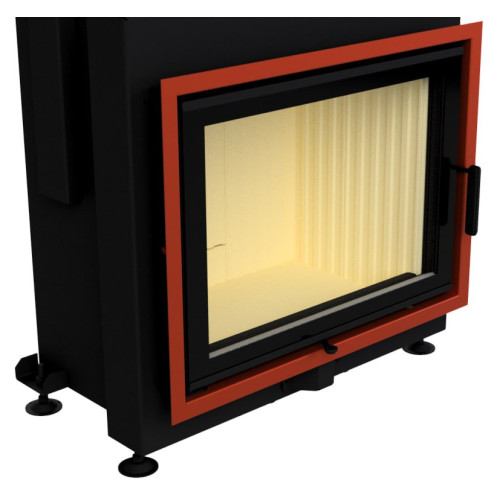
Black 1×90 — front-facing example
AN OUTLINE AROUND THE DOOR

Black 1×90

A black frame in the version made for the corresponding insert model.

What to consider

Compare its outline in the configuration photos for your specific model.

Black 2×45
AN ALTERNATIVE FRAME PROFILE

Black 2×45

An alternative mounting-frame profile.

What to consider

Available only for models that offer this configuration.

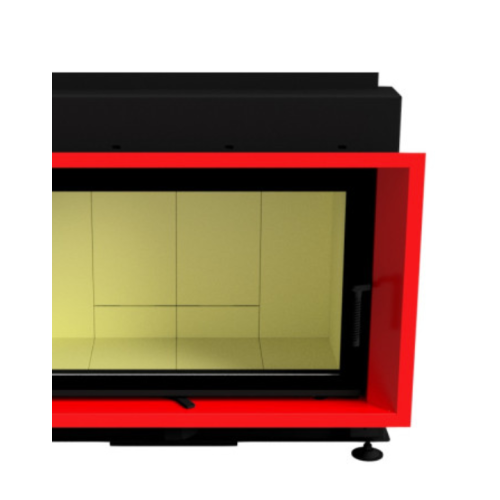
Black 3 mm — three-sided version
FOR SELECTED MODELS

Black 3 mm

The version designated 3 mm, for selected lift-door corner and three-sided inserts.

A separate version matched to the insert geometry, not a universal replacement for 1×90 or 2×45 frames.

OPTION 03

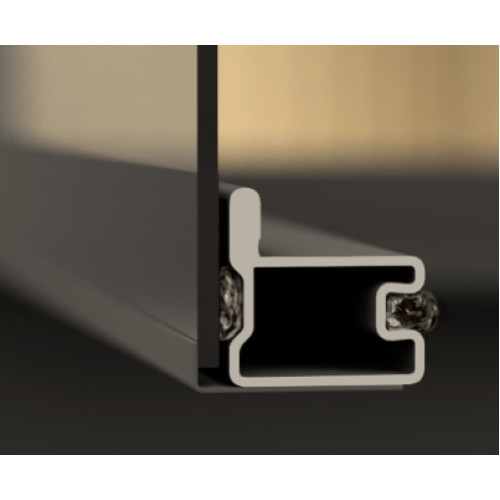
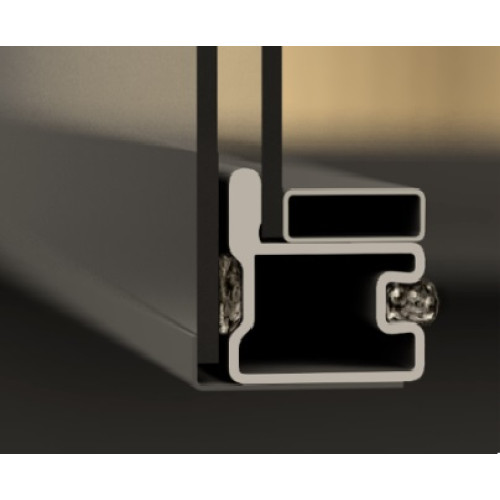
Single or double glazing

Every fireplace insert has its own heat distribution. Some useful heat enters the room directly through the glass, while another part is transferred through the heat collector and insert body. The glazing configuration affects this balance.

Two paths for heat transfer

Through the glass into the room

Direct radiant heat is felt in front of the fireplace and affects comfort nearby.

Through the heat collector and body

Heat passes to the air and fireplace surround, depending on the design and installation.

All other conditions being equal, a larger glass area generally means more direct radiant heat entering the room.

Heat output distribution — check your insert documentation

Refer to the technical documentation for the specific fireplace insert for the exact shares of heat output transferred through the glass and through the heat collector and body. The effect of double glazing depends on the model and operating conditions.

Compare glazing options

Single glazing
ONE LAYER OF GLASS

Single glazing

A direct feeling of warmth in front of the fireplace.

Heat into the room
More direct radiant heat through the glass than with double glazing under comparable conditions.
Comfort nearby
A stronger feeling of warmth in front of the fireplace. Consider the room size, glass area and position of seating.
Combustion
One layer of glass transfers more heat out of the chamber. Combustion conditions depend on the insert design and how it is operated.
What to consider
The basic version on models where it is listed in the configurator. Check the technical documentation for precise specifications.
Double glazing
AN ADDITIONAL LAYER OF GLASS

Double glazing

Less direct radiant heat entering the room.

Heat into the room
Less direct heat through the glass into the room than with single glazing, all other conditions being equal.
Comfort nearby
Less intense radiant heat can make spending time near the fireplace more comfortable.
Combustion
Helps maintain a higher chamber temperature and can support more efficient combustion. Results depend on the model and operating conditions.
What to consider
Choose only a glazing configuration specified for your model. Check its technical documentation for the heat output distribution.
DOUBLE GLAZING DOES NOT PREVENT BURNS

The outer glass surface remains hot. Do not touch the glass while the insert is operating or until it has fully cooled. Follow the manufacturer’s instructions.

OPTION 04

Additional heat storage

Heat-storage elements fitted to the insert body add thermal mass. They sit outside the combustion chamber and do not replace its internal lining.

How it works

The elements absorb heat from the insert body during operation and gradually release stored heat as combustion subsides.

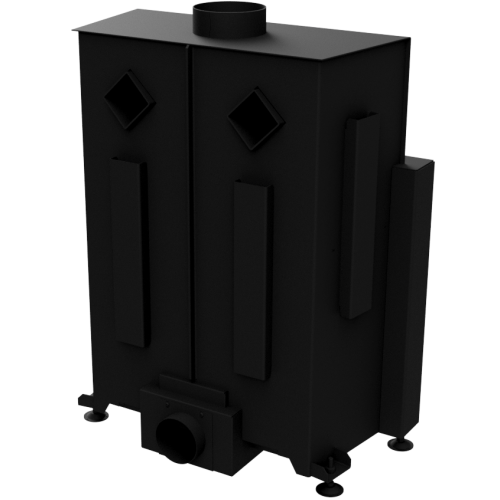
Without extra body-mounted blocks
NO EXTRA MASS ON THE BODY

Without body-mounted blocks

The configuration without extra heat-storage elements on the insert body.

What it means for you
A configuration for a design that does not include extra thermal mass on the insert body.
What to consider
Use the specific insert configuration and fireplace design to guide your choice.
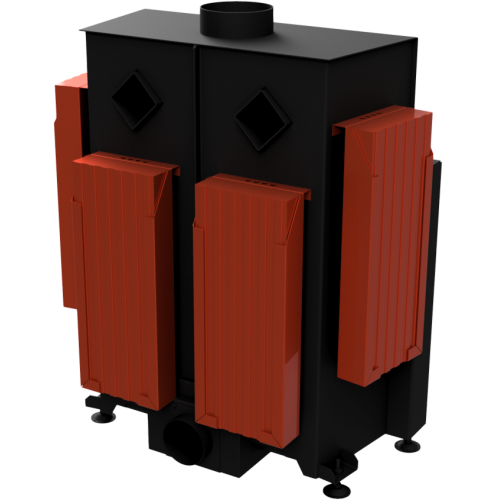
With extra body-mounted blocks
EXTRA MASS ON THE BODY

With body-mounted blocks

The heat-storage element set designed for the specific insert model.

What it means for you
Additional stored heat that is gradually released as combustion subsides.
What to consider
Use the heat-storage element set designed for your particular insert model.
The heat-release period depends on the configuration

The insert model, configuration, firing cycle and surround affect how long stored heat is released.

OPTION 05

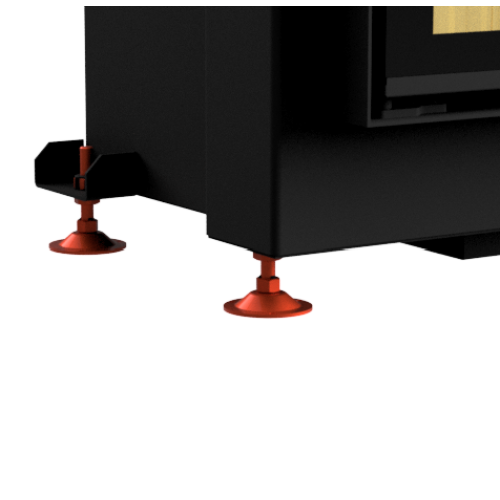
Extended legs

The legs set the position of the insert above its base. The height ranges below come from the leg drawing. These dimensions refer to the legs, not the overall insert height. The available version and precise dimensions must be checked for the specific model.

Match the installation height to the surround, plinth and desired position of the fire within the interior.

Standard legs
STANDARD VERSION

Standard legs

50–60 mmHeight shown in the drawing

The standard support height for the corresponding insert model.

Installation considerations

Check the precise dimensions and installation clearances against the drawing for the chosen insert.

Extended legs
EXTENDED VERSION

Extended legs

300–340 mmHeight shown in the drawing

Extended supports raise the insert compared with the standard version.

Installation considerations

Account for the overall fireplace height, viewing window position and flue connection. Corner inserts require the corresponding corner leg set.

OPTION 06

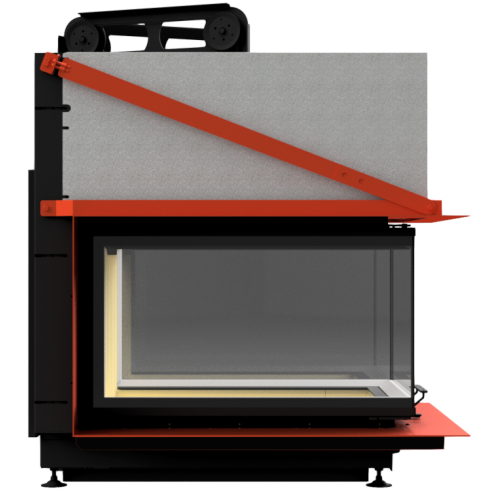
Left or right orientation

For models with a choice of orientation, the position of the side glass helps align the view of the fire with the room layout — including walls, furniture and walkways.

The diagrams show a top view. You are standing in the room, facing the front glass: left and right are shown from your viewpoint.

TOP VIEW

Side glass on the left

The fire is visible through the front glass and the left side glass.

TOP VIEW

Side glass on the right

The fire is visible through the front glass and the right side glass.

GlassBody

From an option to your configuration

Return to your chosen insert, compare the available versions and match the configuration to your fireplace design. Learn more about materials and construction in Technologies.